Blog Posts

Blog Posts

Johan Peitz on PICO-8 Game Development – Software Engineering Daily

PICO-8 is a software-based gaming console for making, sharing, and playing small games with a retro aesthetic. It emulates the look and feel of 8-bit consoles, providing limited color palettes, screen resolutions, and memory constraints. The PICO-8 dev environment uses Lua and is focused on being accessible to developers while offering depth for complex projects.

The post Game Development on the PICO-8 with Johan Peitz appeared first on Software Engineering Daily.


Imagine if your real computer were a giant Lego brick!

In 1979 – nearly 50 years ago – Lego jazzed up its very first spaceships with an iconic sloped computer brick that was just painted plastic. In 2022, we introduced you to the engineer who fit an actual tiny computer inside. Now, industrial designer Paul Staal has flipped the script with a working desktop PC […]

Amazon Provides a $200 Reduction on Samsung Galaxy S26 Ultra Versus Samsung’s Pricing

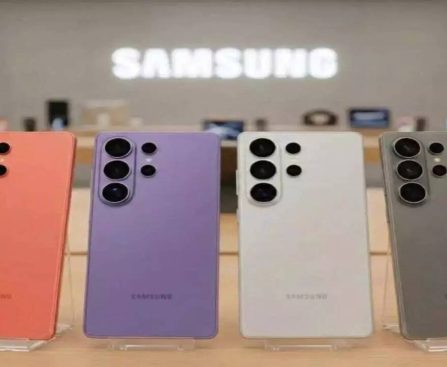
the new privacy screen feature on the Samsung Galaxy S26 Ultra enables users to render the display nearly invisible from side perspectives. As for the S26 Ultra, it represents the priciest model in the phone lineup, showcasing the most significant enhancements overall. However, this can be balanced out by some impressive launch promotions that Samsung and various retailers are currently providing, particularly if you possess an old gadget to exchange.

To spice up the competition a bit, Amazon is offering a discount that’s $200 lower than Samsung’s current pricing. The 512GB variant of Samsung’s Galaxy S26 Ultra on Amazon is not only $200 less expensive, but you also receive a $200 Amazon gift card with your purchase.

For a limited period, the Galaxy S26 Ultra is listed at $1,299.99 on Amazon. You could save an additional $550 on this price with a qualifying trade-in. In contrast, Samsung sells the Galaxy S26 Ultra 512GB unlocked model for $1,499, though you can receive up to $900 off with eligible trade-ins. With discounts and offers, they essentially come out to a similar price. Amazon mentions that the gift card might be shipped separately, so bear that in mind. Additionally, the gift card is exclusive to Amazon, meaning it cannot be used elsewhere — but if you intend to spend $200 on Amazon regardless, it’s a great way to save some cash.

<div class="

Elijah Wood’s Underrated Post-Apocalyptic Sci-Fi Movie Now Accessible on Peacock

The “Lord of the Rings” actor was barely recognizable in “Back to the Future 2,” where he made his debut as a young performer. With years of experience under his belt, both in film and voice acting, Wood had garnered sufficient skill to bring life to the main character in “9.” It’s a film that often gets overlooked and underrated, yet it’s a must-see as a snapshot from a bygone era of animated features.

The captivating sci-fi dystopia received acclaim from critics

Pentagon Officially Identifies Anthropic as Supply-Chain Risk

After weeks of failed negotiations, public ultimatums, and lawsuit threats, the Defense Department has formally labeled Anthropic a “supply-chain risk”, escalating its fight with the AI company over their acceptable use policies and potentially bringing their fight to court. The decision, first reported by The Wall Street Journal on Thursday, citing one source familiar, will […]

Amazon Ceases Its Robot Innovation Initiative

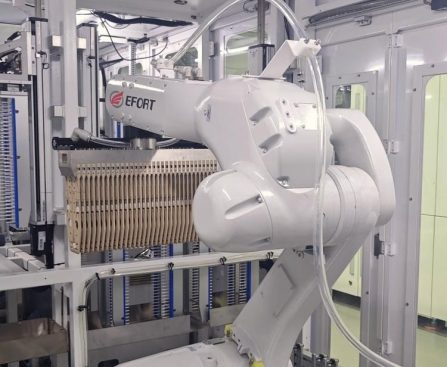
After fewer than six months in operation, Amazon has dismissed its latest warehouse robot. Introduced in October 2025, Blue Jay was a multi-limbed robot designed to act as “an additional set of hands” in the ecommerce giant’s warehouses. The initial report by Business Insider highlights how this conclusion reflects the unpredictable integration of AI technologies into the workplace, particularly regarding physical systems. This is not to imply that autonomous robots have not left their mark. In recent years, robots, especially those from China, have begun transforming various sectors, from automating farming tasks to innovating logistics on the battlefield. Nevertheless, Blue Jay serves as another instance in a lengthy history of AI robotics initiatives that have fallen short of ambitious expectations, as advancements in robotics have lagged behind those in digital technology. Moreover, the physical expenses linked to autonomous robotics have made the cost of failure considerably higher.

One of the standout projects of Amazon’s Robotics division for 2025, Blue Jay was initially celebrated as the peak of Amazon’s venture into autonomous robotics. The development timeline was notably shortened compared to earlier projects like Robin or Sparrow, which each required more than three years to transition from concept to deployment.

Amazon claims that Blue Jay was developed in just one year, leveraging innovations such as digital twins, which utilize virtual simulations to test prototypes, to “create systems like Blue Jay more intelligently and swiftly.” Despite this achievement, factors such as cost concerns and implementation hurdles, alongside evolving priorities within Amazon’s warehouse operations, have resulted in the cutting-edge robot being put on hold. Amazon states that Blue Jay’s “underlying technology” will “continue to assist employees across our network.”

The robot revolution that did not materialize

Blue Jay was introduced alongside Amazon’s agentic AI system, Project Eluna, in October 2025. Amazon described it as performing like “a juggler who never drops a ball,” positioning Blue Jay as an additional set of hands capable of amalgamating several robotic systems at a single station. Upon its launch, Blue Jay was advertised as “already capable of picking, stowing, and consolidating approximately 75% of all the various types of items we store at our locations” in the company’s South Carolina facility. An Amazon spokesperson, in a conversation with TechCrunch, clarified that Blue Jay was launched as a prototype, not a fully developed, widely deployed program. Notably, Amazon’s press release at the time did not mention this, instead promoting the emerging robotics program as helping “keep employees operating in their ergonomic ‘power zone.'”

Despite the enthusiasm, Amazon encountered multiple challenges when rolling out its novel robotic warehouse division. For one, Blue Jay turned out to be remarkably costly and complicated to produce. Additionally, its integration into warehouse processes was less than optimal. These concerns are common when establishing AI-driven warehouses and manufacturing facilities, where significant upfront investments, complex system integrations, technical difficulties, and a lack of trained staff often doom initiatives like Blue Jay before they begin.

These challenges are particularly pronounced when considering humanoid robots. This is perhaps best exemplified by Tesla’s Optimus, whose public misadventures have been a source of contention for owner Elon Musk, who has promoted the technology as capable of generating $10 trillion in future income. Overall, the discontinuation highlights the obstacles that companies face as they strive to incorporate artificial intelligence, autonomous robots, and other AI technologies into their workflows.

Amazon’s robotic future

This shift indicates a larger transformation in Amazon’s warehouse structure. Initially, Blue Jay was imagined as a component in Amazon’s “Local Vending Machine” framework of extensive, highly automated warehouses. Sources interviewed by Business Insider revealed that the conglomerate is transitioning to a system called “Orbital,” in which a more adaptable, reconfigurable layout will improve its same-day delivery service by emphasizing scalable growth and flexibility while reducing warehouse sizes. Amazon anticipates that Orbital will enable Whole Foods to more effectively manage perishable items and frozen goods while aiding in grocery deliveries. Importantly, Business Insider notes that such a transition will not occur until 2027.

The ending of Blue Jay does not signify the conclusion of Amazon’s robotic advancements. According to a report from the New York Times, released just a day before Blue Jay’s significant initial announcement and referencing internal documents, the conglomerate intends to automate roughly 75 percent of its operations. The report also indicated that the nation’s then-second-largest employer estimated it could diminish its U.S. hiring requirements by over 160,000 individuals by 2027. The anticipated benefits, as revealed in these documents, equated to around 30 cents in savings per item. How Blue Jay’s setback will influence these initiatives, however, remains to be seen.

In that context, Amazon is more likely to amplify these pursuits rather than discourage them. Since launching its robotics program in 2012, over 1 million robots have been introduced across its warehouses. Its Vulcan program, which also debuted in 2025, marked Amazon’s first robot with a “sense of

Verification of Upcoming Xbox Console Speculations Indicates Possible Change in Gaming Sector

The Speculations Regarding The Upcoming Xbox Console Are Accurate, And It May Transform Gaming

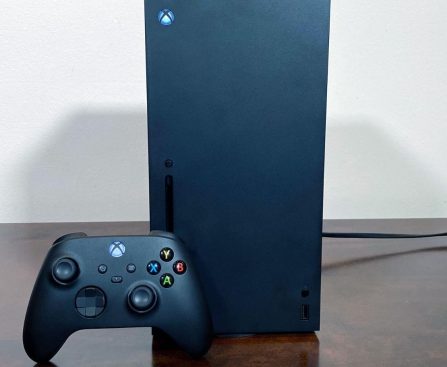
It has been more than five years since we entered the “next generation” of gaming with the Xbox Series X and PlayStation 5. Depending on your perspective, the downturn of the Xbox has been quite noticeable as the continuous growth of Xbox Game Pass and the accessibility of the console’s “exclusives” on PC — and very soon PlayStation as well — has only increased thanks to the company’s extensive strategy of backing various platforms. Nevertheless, it appears Xbox is not quite ready to abandon hardware. Instead, the upcoming Xbox console will pave the way, as Microsoft asserts it can run both PC and Xbox games.

While speculation has been circulating for months, we have finally received our first concrete insight into what to anticipate from Microsoft’s forthcoming Xbox. The newly appointed Xbox CEO Asha Sharma revealed on X today that the new console, codenamed Project Helix, will “play your Xbox and PC games,” and that the gaming firm plans to disclose more about its features and expectations at GDC later this month.

And that’s the catch. We still possess limited information regarding the next generation of Xbox consoles. Sure, numerous speculations exist, but with the persistent chip shortage and soaring RAM costs — which have escalated to the point where future laptop configurations might entirely change — a more gaming console that potentially functions as a PC could aid consumers in rationalizing the purchase and provide Xbox a rationale for the pricing.

PC games are arriving on the next Xbox

Most of the rumors we’ve encountered in recent months originated in 2025, when Microsoft unveiled the initial details about its intention to launch an Xbox-branded variant of ASUS’s ROG Ally. The ROG Xbox Ally X presented an intriguing perspective on Xbox gaming, not only granting access to PC games but also allowing users to play Xbox games, provided they had a PC version. However, that’s where it stopped being an Xbox, as it lacked the ability to play Xbox-exclusive games natively.

Naturally, the ROG Xbox Ally and Ally X were merely components of the “This is an Xbox” initiative, where the company underscored all devices capable of playing Xbox games through the cloud. Moreover, with the Xbox ROG Ally achieving notable success by implementing the Xbox UI on a portable Windows device, it doesn’t seem far-fetched that the company will logically advance by making its next console more akin to a PC as well. In fact, we are already observing other companies creating living-room friendly PCs with the launch of the Steam Machine from Valve. Additionally, there’s Xbox’s ongoing collaboration with AMD. In a video commemorating the partnership, from June 2025, Sarah Bond, former President of Xbox, suggested that future Xbox consoles would not be restricted to a single storefront.

While the ROG Xbox Ally is unable to play native Xbox games, Bond reassured fans that this wouldn’t hold true for its upcoming consoles. If Microsoft fully embraces the notion of making everything an Xbox, then it will fundamentally alter our gaming experiences. Fortunately, we won’t have to wait long for further details, as GDC begins on March 9, 2026.